If you have ever asked yourself "why does my concealer crease," you have probably noticed it happens at the worst possible time, right when you are about to walk out the door looking flawless. One minute your under-eyes look smooth and bright, and a few hours later there is a visible line settled right into the area you worked so hard to cover. The good news is that creasing almost always comes down to a few fixable habits, not a bad concealer.
In this guide, you will learn:
By the end, you will know exactly what to change to keep your concealer looking smooth from morning to night.
Creasing happens when concealer settles into the fine lines and natural folds under your eyes instead of sitting smoothly on top of the skin. As your face moves throughout the day, whether from talking, blinking, or smiling, that movement pushes the product into those lines and makes them more visible.
A few things make this more likely to happen. Dry or dehydrated under-eye skin gives concealer texture to grab onto. Using too much product in one spot gives it more to settle into as the day goes on. A formula that is heavier or drier than your skin needs can also crease faster, even if the coverage looks great when you first apply it.
The skin under your eyes is thinner and more delicate than the rest of your face, which means it shows dryness and texture more easily, and that texture is exactly what concealer tends to settle into.
Starting with a hydrating eye cream gives your skin a smoother, more cushioned surface for concealer to sit on. Just as important is giving that eye cream time to fully absorb before you start applying makeup. Putting concealer over skincare that is still sitting on the surface is one of the fastest ways to end up with product sliding around and settling into lines within an hour.
Not every concealer is built for the under-eye area, and the wrong formula can make creasing worse no matter how carefully you apply it.
Heavier, full-coverage formulas tend to be thicker and drier, which gives them more tendency to crease, especially on drier skin. A lighter, more hydrating formula usually performs better under the eyes, even if you reach for a fuller coverage product on the rest of your face.
Just as important as the formula is how much you use. It is tempting to apply a thick layer for maximum brightening, but a small amount blended well almost always looks better, and lasts longer, than a heavy layer. If you need more coverage, it is better to build it up in thin layers than to apply too much at once.
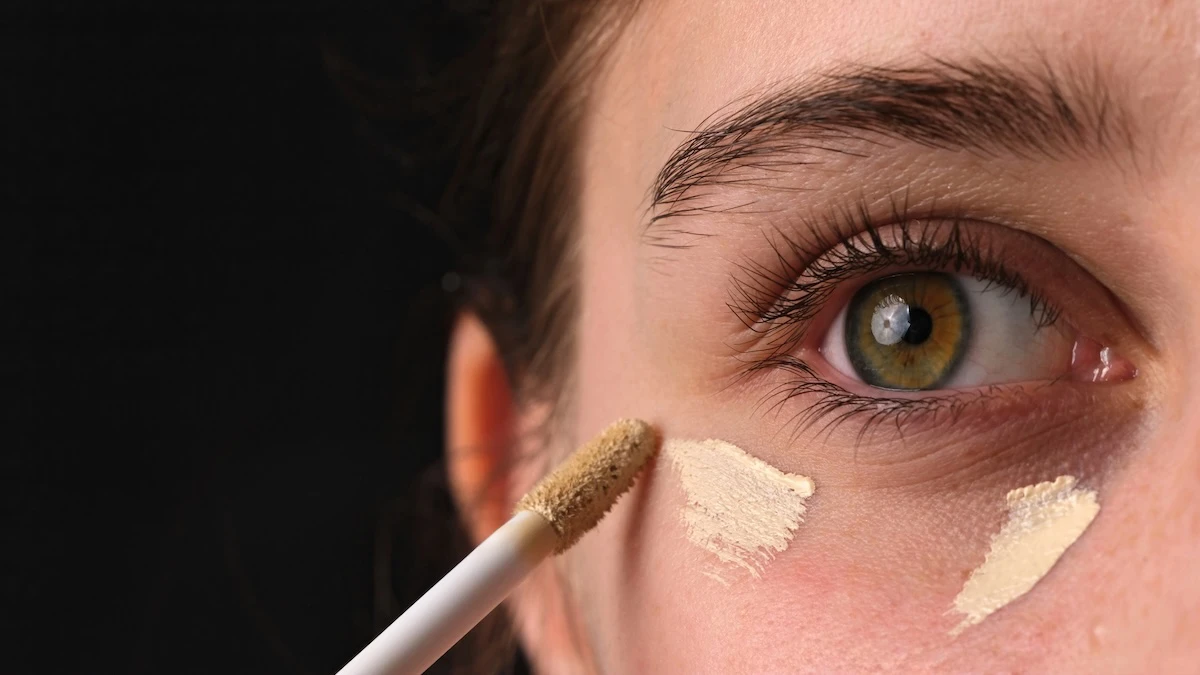
How you apply concealer matters just as much as the product itself when it comes to preventing creases.
This approach keeps the amount of product on your skin light and even, which gives it far less to crease into later.
Setting concealer is an important step, but doing it incorrectly can actually cause more creasing instead of preventing it.
The baking technique works well here. Press a light layer of translucent powder under the eyes using a small, fluffy brush or sponge, then let it sit for a few minutes before gently dusting away the excess. This gives the powder time to absorb any extra moisture or oil before it gets disturbed.
It is also worth noting that setting only the concealer area, rather than dusting powder heavily over the entire face, helps avoid both creasing and a thick, cakey look. A light touch with powder goes a long way.
A handful of small habits are usually behind most creasing complaints, and each one is easy to adjust once you notice it.
Most of these are easy to catch once you know what to look for, and fixing even one or two of them can make a noticeable difference in how your under-eye area looks by the afternoon.
If you notice creasing has already started, there is no need to wipe everything off and start over.
Gently pat the area with a clean finger or a slightly damp sponge to soften the line and reblend the product back into the skin. In many cases, this alone smooths things out enough that you do not need to reapply anything.
If the area still looks uneven after blending, a very thin layer of fresh concealer pressed on top, followed by a light dusting of powder, usually finishes the job. There is rarely a need for a full reapplication, just a quick touch-up to refresh the area.
A few small habits can help your concealer stay smooth well past the morning.
Finish your under-eye area with a light mist of setting spray, which helps blend powder and concealer together for a more natural, lasting finish. Throughout the day, if you need a touch-up, use a small amount of fresh product rather than layering more concealer directly on top of what is already there, since extra product on top of set makeup is one of the easiest ways to trigger new creasing.
Choosing a hydrating, crease-resistant formula specifically for the under-eye area, even if you use a different concealer elsewhere on your face, can also make a noticeable difference over the course of a long day.
Concealer creasing almost always comes down to skin prep, product amount, and setting technique rather than a flawed product. Once those three things are adjusted, a smooth, crease-free under-eye area becomes a lot easier to maintain from morning until night.
If you would like hands-on practice with concealer application, color correcting, and building a routine that holds up all day, explore our Makeup and Hair Classes in Columbus, Ohio and let our team help you build a routine that works for your skin.