How to contour for a round face is one of the most searched makeup questions out there, and it is easy to see why. Round faces are beautiful, but a lot of contouring tutorials are written with angular face shapes in mind. The result? Techniques that look overdone, unnatural, or just plain wrong on fuller, softer features.
The good news is that once you understand where to place product and why, contouring a round face becomes straightforward and genuinely fun. In this guide, you will learn:
By the end, you will have a clear, repeatable technique you can use every day or build on for bigger occasions.
A round face is defined by balance, but not the kind that works in your favor when it comes to contouring. The width and length of a round face are roughly equal, which gives it a soft, circular appearance. The cheeks tend to be full, the jawline is rounded rather than angular, and the hairline curves gently without strong corners or definition.
What this means for contouring is that the goal is not to enhance existing structure the way you would on an oval or heart-shaped face. Instead, the goal is to create the illusion of structure where there is natural softness. That means using shadow to visually push certain areas back and using light to draw attention to the center of the face, making it appear longer and more defined.
Before you dive into technique, it helps to make sure you are actually working with a round face shape. Grab a flexible measuring tape and pull your hair back.
Measure these four points:
If your cheekbone width and face length are similar in measurement, and all four measurements are fairly close to each other, you likely have a round face. The key giveaway is the lack of a clearly longer length compared to width, paired with that soft, curved jawline.
It is easy to confuse round and oval faces because both have soft features and no sharp angles. The main difference is that oval faces are noticeably longer than wide, while round faces are nearly equal in both directions. If your measurements suggest you are closer to oval, check out our guide on how to contour an oval face for natural definition for techniques tailored to your shape.
Not all contour products are created equal, and for round faces, the formula you choose can make a real difference in how natural the result looks.
Powder contour is the most beginner-friendly option. It builds slowly, blends easily, and is very forgiving if you apply too much. It works best for normal to oily skin and is ideal for everyday use.
Cream contour melts into skin beautifully and gives a more natural, seamless finish. It is a great choice for dry or mature skin and works well under powder for longer wear.
Contour sticks offer precise, controlled application and are easy to blend with fingers or a sponge, making them a solid option if you want something quick and portable.
For round faces specifically, shade selection matters. Choose a contour that is two to three shades deeper than your natural skin tone and leans cool or neutral. Avoid warm, orange-toned shades, as these read as bronzer rather than shadow and will not create the sculpted effect you are after.
For tools, you will want:
Here is a clear, step-by-step walkthrough of how to contour for a round face. Take your time with each step and remember that lighter is always better to start.
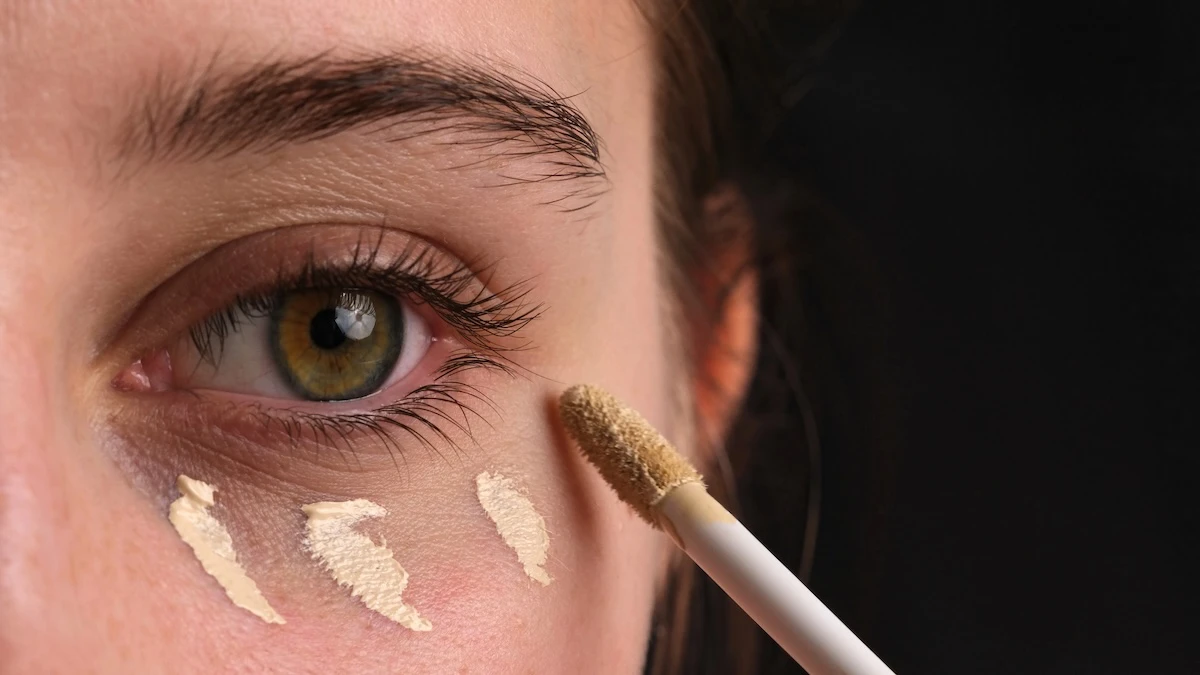
Step 1: Apply your base. Start with foundation and concealer as usual. A smooth, even base makes blending easier and helps contour look more natural.
Step 2: Contour the temples. Apply contour along the hairline at the temples, sweeping it downward and inward slightly. This visually narrows the top of the face and creates the impression of length.
Step 3: Contour the cheekbones. Find the hollow beneath your cheekbones by sucking in your cheeks gently. Starting from just in front of the ear, sweep contour inward and slightly downward toward the corner of your mouth. On a round face, the direction of this sweep matters: keep it angled downward rather than horizontal to avoid widening the face.
Step 4: Contour the jawline. Using your angled brush, apply contour along the underside of the jaw from ear to ear. This creates a shadow that defines the jaw and makes it appear less rounded. Blend it downward onto the neck so there is no visible line.
Step 5: Slim the sides of the nose (optional). If you want added definition, apply a thin line of contour down each side of the nose. This draws the eye toward the center of the face, reinforcing the illusion of length.
Step 6: Blend everything. Use your fluffy brush in soft, upward buffing strokes to blend all contour lines until they look like natural shadows. Nothing should be visible as a distinct stripe or edge.
Step 7: Set your work. Lock everything in place with a light dusting of translucent setting powder or a setting spray.
Highlight placement is just as important as contour placement on a round face. The goal is to draw light to the center of the face, which creates the visual illusion of length and keeps the focus away from the widest parts.
The best highlight placements for a round face are:
Avoid applying highlight to the outer edges of the face, including the sides of the forehead and the outer cheeks. Placing light in these areas will visually widen the face and undo the work of your contour.
Blush is one of the most underrated tools in a round face makeup routine, but it can either support your contour beautifully or completely work against it depending on where you place it.
The classic circular blush placement that sits directly on the apple of the cheeks is the one technique to avoid on a round face. It emphasizes the roundness and fullness of the cheeks rather than creating the angular effect you are working toward with your contour.
Instead, apply blush in a swept-back direction, starting just below the cheekbone and blending it upward and outward toward the temples. This placement works with your contour to create a lifted, elongated effect.
For a complete guide to getting blush right on a round face, our post on how to apply blush on a round face without looking overdone walks through everything in detail, including the best blush formulas and shades for this face shape.
Even perfectly placed contour will look harsh and unnatural if it is not blended well. Here are the techniques that work best for round face contouring.
For powder contour, use a fluffy brush and work in upward buffing strokes. Blend the edges outward so the color gradually fades rather than stopping abruptly. The goal is for the contour to look like a shadow your face naturally casts.
For cream contour, use a damp beauty sponge with a tapping motion rather than swiping. Swiping moves the product across the skin instead of pressing it in, which can create streaks and disturb your foundation underneath.
Common blending mistakes to avoid on round faces:
If your contour looks too intense after blending, press a clean fluffy brush over the area with no product and work it in circular motions to diffuse without removing.
One of the great things about this technique is how easily it scales depending on how dressed up you want to look.
Everyday natural look: Use a powder contour with a very light hand on the cheekbones and temples only. Skip the jawline and keep everything soft and blended. The result should add just a hint of definition without looking obviously contoured.
Daytime event or brunch: Add the jawline contour and a slightly more defined cheekbone. Pair with a swept-back blush and a satin highlight on the cheekbones for a polished, put-together look.
Evening or special occasion: Build the contour to a more visible level across all zones, temples, cheekbones, and jaw. Use a more luminous highlight and layer it for extra impact. Everything should still be blended seamlessly, just with more depth and presence.
Contouring does not work in isolation. The shape and placement of your brows play a significant role in how structured and elongated your face appears, and the right brow shape can make your contour look even more effective.
For round faces, a higher arch with a slight angular peak creates the impression of lift and length. Flat or rounded brows tend to reinforce the circular shape of the face, while a well-defined arch draws the eye upward and adds vertical dimension.
For a full breakdown of which brow shapes work best for round faces and other face shapes, our guide on the best eyebrow shape for your face covers everything from arch placement to tail length so you can make the most of your natural brows alongside your contouring technique.
Even with a solid technique, there are a few easy traps to fall into.
Placing contour too low on the cheeks. Contour that sits below the cheekbone hollow and onto the actual cheek adds fullness rather than removing it. Always find the hollow first.
Blending inward instead of outward. On a round face, contour should always be blended toward the hairline, not toward the nose or the center of the face.
Using a shade that is too warm. Orange or red-toned contour looks like bronzer, not shadow. It adds warmth but no definition.
Forgetting the temples. Skipping temple contour leaves the top of the face wide and unframed. It is one of the most important zones on a round face and one of the most commonly skipped.
Applying too much product at once. Build up slowly and check your work in natural light before adding more.
Learning how to contour for a round face is really about understanding one core idea: use shadow to create length and structure where the face is naturally soft. Once that clicks, the whole process becomes much more intuitive.
Start with the temples and cheekbones, add the jaw when you are ready, blend everything outward and upward, and build from there depending on the occasion. Pair your contour with strategic highlight placement and a swept-back blush, and you have a complete sculpting technique that works every time.
When you are ready to put it all into practice with hands-on guidance, the team at 614 Beauty is here to help. Book a session through our makeup and hair classes in Columbus, Ohio and get personalized coaching that makes these techniques click faster than any tutorial ever could.